Mold Odor Removal in Denham Springs, LA
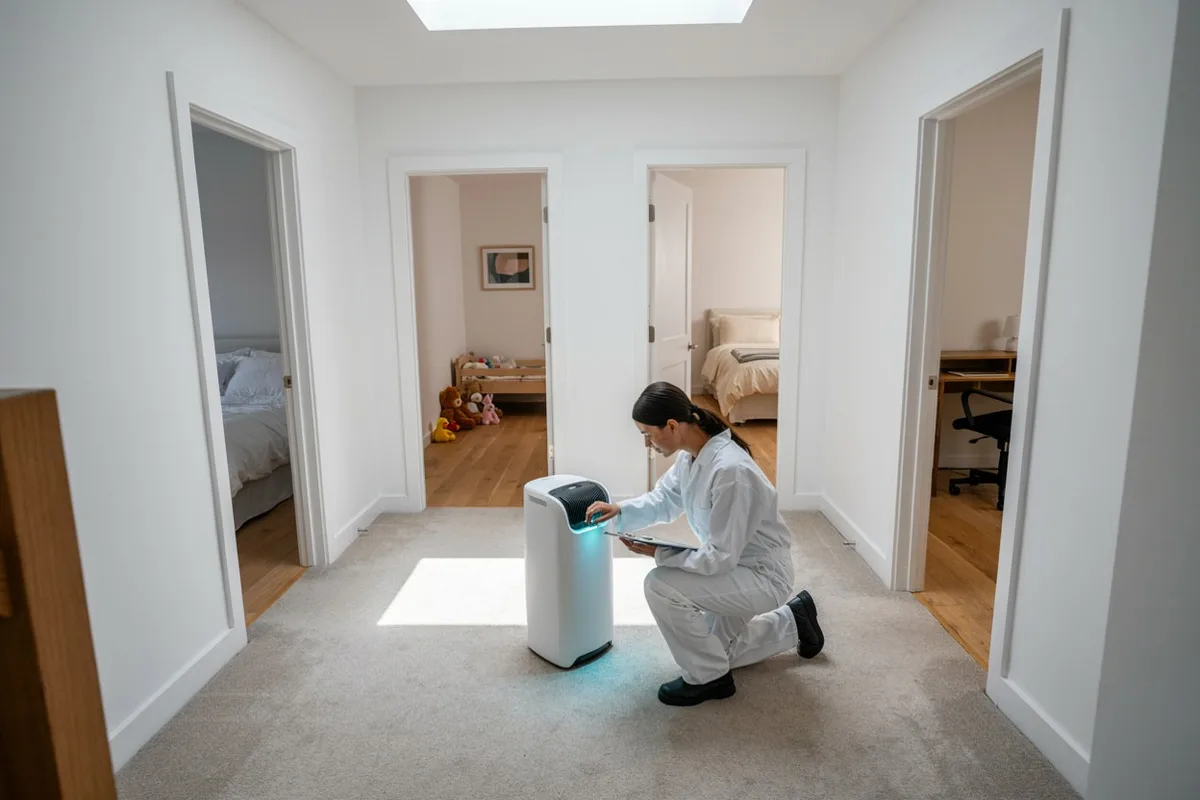
One room has never smelled right. It’s worse in July, worse after rain, worse when the house has been shut up for a weekend. You’ve tried candles, plug-ins, a carpet cleaner, and a fresh coat of paint, and it comes back. We track down and remove the growth behind mold odors in Denham Springs, Walker, Watson, and across Livingston Parish. Call and tell us which room.
The smell is information
A musty odor is a recognized sign of hidden mold, and in Livingston Parish it is usually the first thing a homeowner notices in a room that was gutted and rebuilt after 2016. EPA lists where growth hides: the back side of drywall and wallpaper, the underside of carpet and pad, inside walls around pipes, above ceiling tiles, and in ductwork. None of that is visible from the room. The smell is. When it’s stronger in one place than another, that’s where the material is wet.
Reading the room
- When one room always smells different from the rest of the house, the water problem is usually in that room’s walls, floor, or ceiling.
- Water damage leaves clues — a baseboard that has pulled away, a faint ripple in the paint, a floor that’s cooler in one spot.
- A recurring musty smell years after major water damage can mean framing that was closed up before it fully dried.
- Deodorizers and paint change what you notice, not what is growing.
Tell Us Where You Smell It, 24/7

What odor removal actually is
It’s mold removal with a search in front of it. We start where the smell is strongest, open the wall or lift the flooring there under containment, and follow the wet material until it stops. What grew comes out. What stays gets cleaned and dried. Then we tell you where the water was coming from and what has to change. When the source is gone and the material is gone, the smell is gone — there’s nothing left to mask.